
New joint intel report warns of cyber threats to growing LEO satellite constellations
A report by several national intelligence agencies offers mitigations to protect against cyberattacks on LEO satellite constellations.
A report by several national intelligence agencies offers mitigations to protect against cyberattacks on LEO satellite constellations.

The project, called Sirb in a reference to the Arabic term for flock of birds, is to eventually put three UAE-made synthetic aperture radar (SAR) satellites into low Earth orbit.


A commitment to long-term operational value.

On the two year anniversary of the war, the Breaking Defense team has assembled a series of pieces on the state of the conflict across multiple domains, what might come in year three, and what lessons the US has learned from the conflict.

SDA and MDA need to characterize the Earth's infrared background -- which has "a lot of complex shapes to it, clouds, land and stuff like that" -- in order to "pull out the dim signal" of a hypersonic missile, an SDA official explained.

Two of the experiments, each involving two satellites, are focused on laser links: one between satellites themselves; the other from satellites to a MQ-9 Reaper drone on the ground.

A next step will be a series of "strategic directives" from the Joint Requirements Oversight Council that roll out "over the next few months," Brig. Gen. Rob Parker, Joint Staff J6 Deputy Director says.

AI-enabled workflows accelerate production, but cybersecurity and governance remain central.
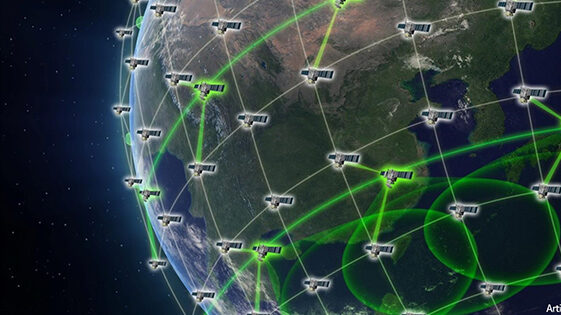
"We really focused on payloads that had tactical utility, because they were an underserved market," said Blackjack program manager Stephen Forbes.
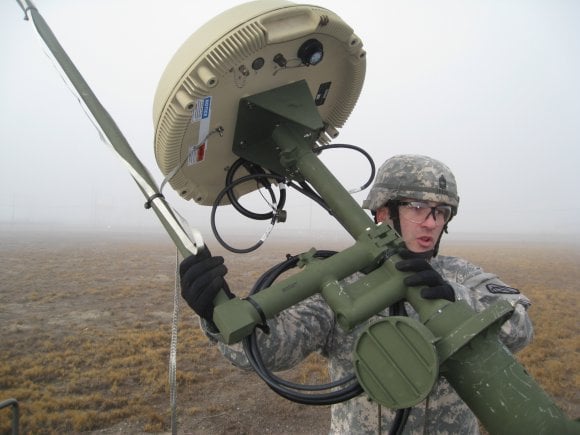
The upcoming upgrade to the Army’s tactical network, Capability Set ’23, will exploit the boom in commercial Low- and Medium-Earth Orbit satellites to boost communications for fast-moving Stryker units.

"The Army needs information when and where they want it," said Rob Zitz, a former Army intel official. "The IC should not get a vote on what Army needs or how Army executes combat missions."

"Getting a laser beam on a spacecraft to point to a laser receiver on another spacecraft accurately enough with the right power levels, the right waveforms, etc.,-- it's not an easy thing," said General Atomics VP Nick Bucci.


"Being able to tell the commander you don't need to do something is actually a pretty powerful message, as well."

SDA currently is primarily focused on "beyond-line-of-sight targeting for sensitive targets -- so, for ships and mobile missiles," Director Derek Tournear says, as well as for "advanced missile threats."
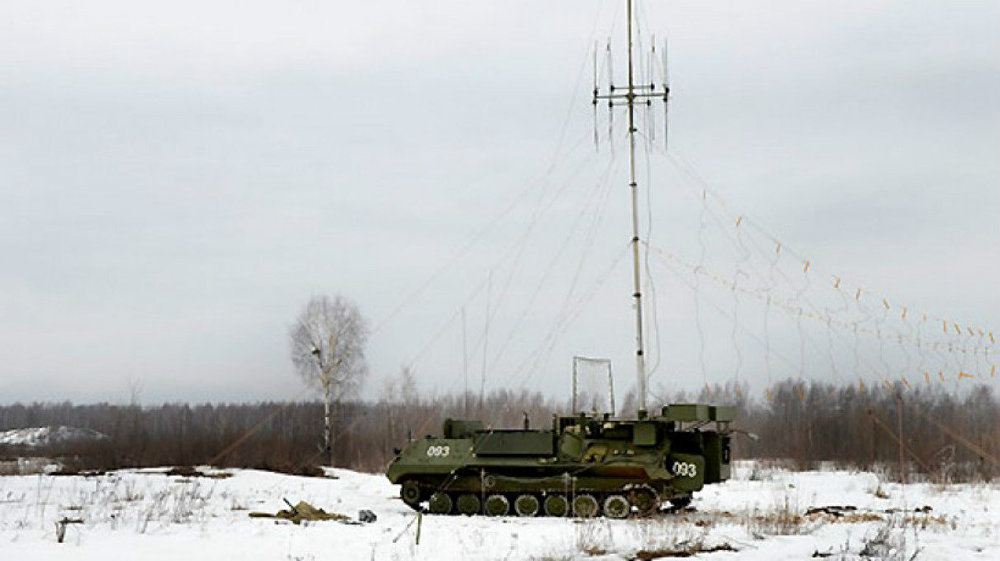
In this fall’s Project Convergence exercises, it took a heroic effort just to get the network to work at all. Next year, the Army wants the network to function in the face of electronic attack.
How do you get targeting data from satellite to howitzer in less than 20 seconds, on a tactical network that was never designed to do that? You improvise, Maj. Gen. Peter Gallagher told me.

"If we get this right, we will be the envy of the other services, because we're not tied to business of the past," says Space Force CSO Gen. Jay Raymond.